DUMBO
Loft Space.
Tell us once what you're after — including the floors that never hit the listing sites. A person reads it. That's the whole thing.
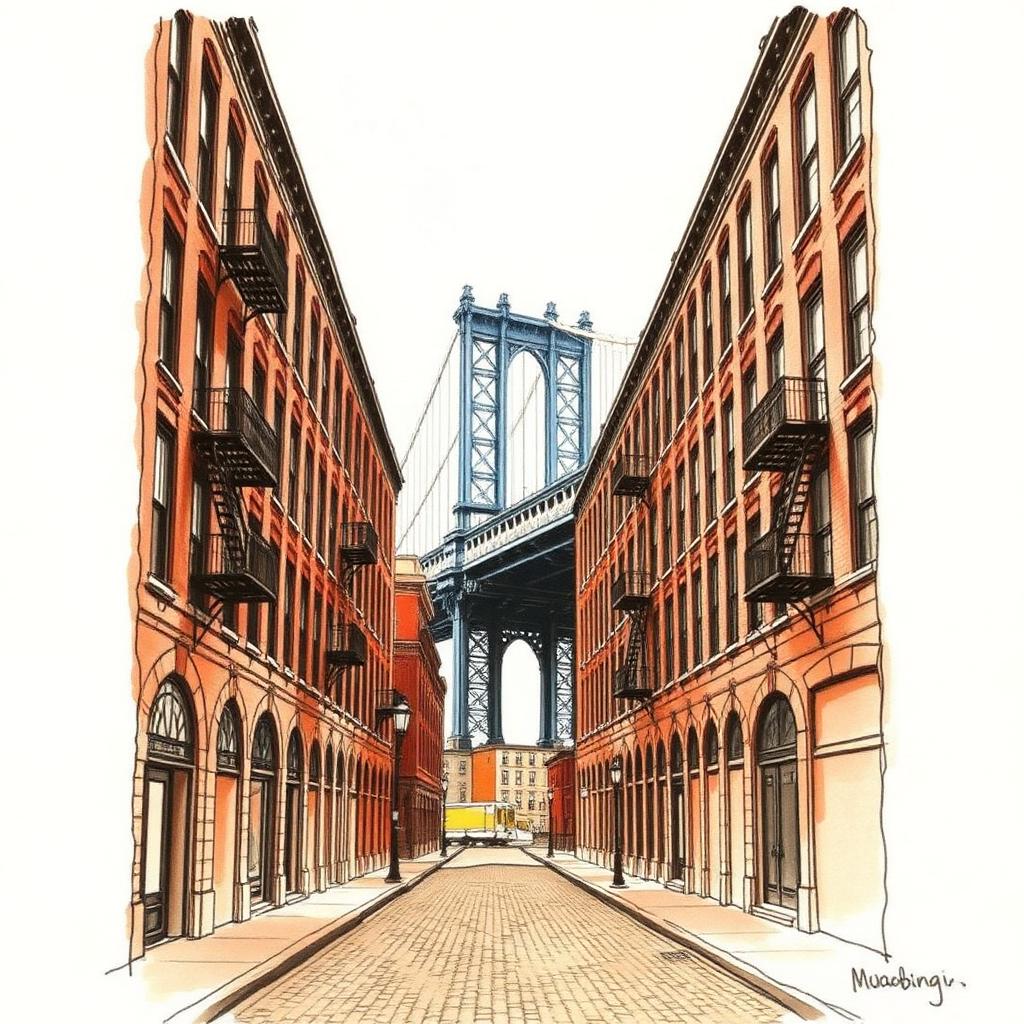
Seven questions.
That's the whole thing.
Under two minutes. No account, no login. A person reads every one.
How much room do you need?
Before you tour, hear what to look for.
Structure, submarkets, and the questions worth asking on a walkthrough — including the ones that decide whether a floor works for what you make.
Century-Old Machines: Inside a DUMBO Loft
A two-host briefing on the brick-warehouse vs. concrete daylight-factory divide, what the structure lets your business actually do, and what to check on a tour. 19 minutes.
AI-narrated
Read the transcript
Host 1When you sign a lease for a modern commercial office loft, you usually expect a completely blank canvas.
Host 2Right, like you just assume it's gonna be four white walls and a basic drop ceiling.
Host 1Exactly, it's just this passive container that gets out of your way. But, since you are actively touring spaces right now, you know that if you cross the river into DUMBO, Brooklyn, that blank canvas totally vanishes.
Host 2Yeah, it really does. You arent just renting a typical workspace out there, you're basically stepping inside a century-old machine. I mean, it's wild.
Host 1Our mission for this deep dive is to basically decode that physical and historical fabric of DUM. Because the architecture in this neighborhood actively dictates what your business can physically do.
Host 2It's like walking into a landscape of fossilized logistics.
Host 1Which is such a cool way to put it. And to figure out exactly what to look for when you're evaluating these unique heavy-duty spaces, you first have to understand the bones of the buildings themselves, right?
Host 2Totally. Before you even choose a space, you have to understand the massive structural divide that splits the neighborhood. Because it fundamentally changes your office's capabilities. You're basically choosing between two vastly different centuries of engineering.
Host 1Right. On one side, you have the 19th century brick warehouse.
Host 2And when you tour one of these, you're instantly greeted by these heavy timber posts, incredibly thick masonry walls, and pretty small punched windows.
Host 1Yeah, the masonry is intense. Because from a purely mechanical standpoint, those exterior walls are entirely load-bearing. Meaning every single brick is doing the work of holding the building up.
Host 2Exactly. So if you try to punch giant holes in that load-bearing wall to let in more sunlight, the structural integrity just fails. The wall would collapse. So that's the physical mechanism keeping those windows so small.
Host 1I always look at these spaces almost like a sturdy medieval castle.
Host 2A medieval castle is a great way to think about it. Right. Because they were engineered with these massive thick walls for one distinct purpose, which was just holding very heavy goods in the dark.
Host 1Yeah. And inside that castle, relying on heavy timber to support the upper floors means you need a really dense forest of wooden columns holding up the ceiling.
Host 2Right. Like every few feet, there's another thick wooden post you have to navigate around.
Host 1Which creates a fascinating contrast when you walk into the second type of skeleton you'll find here, which is the turn-of-the-century reinforced concrete daylight factory.
Host 2Oh, man. Yeah. If the warehouse is a medieval castle, the daylight factory is like a modern open-plan stage. The architecture just flips completely.
Host 1It really does. You walk in and you see these distinctive mushroom-capped concrete columns, flat floor slabs, and just massive multi-light windows spanning across several exposures. And those mushroom columns, I mean, the engineering behind those completely changed industrial history, didn't it?
Host 2It absolutely did. Instead of a straight pillar running floor to ceiling, the top of the column flares out almost like an open umbrella.
Host 1Right. And what that flaring does is distribute the sheer weight of the concrete floor slab above it over a much wider surface area.
Host 2So it's kind of like, imagine a pencil trying to hold up a piece of cardboard. It might poke right through under pressure.
Host 1Yeah. But if you put a flat bottle cap on top of that pencil, the cardboard is supported.
Host 2That's a perfect analogy. That flare distributes the load so efficiently that you completely eliminate the need for deep, heavy beams dropping down from the ceiling.
Host 1And more importantly for the exterior, the internal columns are suddenly doing all the heavy lifting, right?
Host 2Yes, exactly. The outside walls don't have to hold the building up anymore. They essentially just become curtains.
Host 1Wow. So you can replace all that heavy brick with vast expanses of glass?
Host 2Hence the name, daylight factories. They were literally engineered to house massive vibrating machinery while flooding the production floors with natural light.
Host 1But for a tenant today, looking to map out a floor plan, that drastically alters your plate efficiency.
Host 2Oh, completely. Which, just as a reminder, is really just a real estate term for how much of the square footage you're renting can actually be used for desks, walkways, or meeting rooms.
Host 1Right. Because in the brick warehouse, your architects have to design around that tight grid of timber posts. You're constantly dodging columns.
Host 2And you lose natural daylight as you move deeper into the center of the room.
Host 1Exactly. But in the daylight factory, because the concrete carries so much weight so efficiently, the columns can be spaced much further apart. You get these massive, wide-open expanses of highly usable floor.
Host 2It also dictates exactly where you can put heavy things. The concrete factories offer incredibly high, uniform floor loads across the entire span of the room.
Host 1Whereas the older timber warehouse floors have much stricter weight limits, and they actually bounce a bit more.
Host 2Which is terrifying if you have heavy equipment.
Host 1But understanding those structural differences really makes you wonder why this specific pocket of the waterfront evolved from fortress-like brick vaults into massive class and concrete machine floors in the first place.
Host 2Well, the history here is basically causation. It stems entirely from geography. This patch of Brooklyn is the absolute shortest physical distance across the East River to Manhattan.
Host 1Right, going all the way back to 1642, right? There was a man named Cornelis Dirksen who started rowing passengers across the river right here.
Host 2Yeah, and then Robert Fulton brought his steam ferry over in 1814. And the golden rule of infrastructure is that whenever you move people efficiently, freight inevitably follows.
Host 1It always does. So the Empire Store's brick warehouses were built right on the water in the 1860s and 70s to act as these massive hoarding vaults.
Host 2So ships would just pull up, unload coffee, sugar, and grain, and these thick-walled fortresses would just hold it all in the dark.
Host 1Exactly. The active ferry terminal made it the perfect transfer point between maritime shipping and local distribution. But then the neighborhood experienced a massive pivot, right, when the Brooklyn Bridge opened in 1883.
Host 2Yeah, that bridge essentially drained all that ferry traffic overnight. It killed the ferry, but it hypercharged the industrial capacity.
Host 1Because heavier manufacturing moved in to replace the storage vaults.
Host 2Right. Manufacturers wanted to utilize the remaining waterfront, the newly expanded rail networks, and that massive new bridge. They literally threaded a freight rail spur directly through the streets to move raw materials.
Host 1Which is so cool because if you look down while you're walking to a building tour today, those original tracks are still embedded in the B.E. Elgin block streets.
Host 2Yeah, they are. The entire area just became this industrial engine, and the central figure in that transformation was a man named Robert G.A.I.
Host 1G.A.I.R., right. He figured out a mechanical process to cut and crease cardboard in a single pass.
Host 2Which basically popularized the modern folding cardboard box. He relocated his box works to this neighborhood and expanded his operations so aggressively that the area was literally nicknamed G.A.I.R.ville.
Host 1That's amazing. But to run massive heavy printing and creasing machines, you need a building that won't shake itself apart from the constant vibration.
Host 2Right, and timber just couldn't handle the load or the movement. So G.A.I.R. hired Turner Construction at 55 Washington Street to build one of the very first reinforced concrete factory buildings in the entire country.
Host 1At 55 Washington Street. Wow. So he proved the concept right there.
Host 2He did. The concrete daylight factory floors that you're touring today were explicitly poured and engineered to run heavy box machinery.
Host 1So the architecture isn't some, you know, curated aesthetic choice. It is literal fossilized logistics.
Host 2Exactly. That inherited heavy duty capacity of those floors is the actual product being leased today. And knowing that historical timeline lets you read the neighborhood map today with a totally different perspective. Because that evolution naturally carved out three distinct micro markets, and each one offers a very different structural perk and tenant vibe.
Host 1Right. So the first one is the waterfront, which sits along Water Street and the Empire Stores end of the neighborhood.
Host 2Yeah, this is where you find those converted brick warehouses from the 1860s and 70s. And because of the location, this is now the most highly finished space in the area, right? Offering those sweeping bridge and skyline views.
Host 1Oh, absolutely. It attracts tenants looking for prestige and aesthetic character. So naturally, it commends the highest rents. But then you move slightly inland to the second micro market, which we call the G.A.I.R. core.
Host 2Right. Which encompasses Washington, Water and Plymouth Streets, situated right between the two bridges. This is where you find the dense cluster of reinforced concrete daylight factories.
Host 1Yes. Because they were built for G.A.I.R.'s heavy machinery, these buildings offer the largest and most efficient floor plates.
Host 2Which explains the tendency. I mean, consequently, this core houses most of the tech, design and product focused tenants. A tech company with hundreds of employees just desperately needs that wide open, highly efficient column grid.
Host 1Exactly. And then the third micro market is the inland blocks. This pushes further away from the water, heading toward Jay Bridge and York Streets.
Host 2So as you move inland, you transition back into older brick and timber buildings.
Host 1Yeah, the floors there tend to be smaller and left in a much rarer condition. It's the least expensive space in the neighborhood, catering to smaller teams. Though it does require a slightly longer walk to the waterfront amenities. But you know, there's a fascinating counterintuitive fact about how these markets shake out.
Host 2What's that?
Host 1Well, in almost any other commercial real estate search, the word waterfront implies the newest, most modern, hyper-efficient glass buildings.
Host 2Oh, right.
Host 1But here, the script is totally flipped. The waterfront is dominated by the oldest fortress-like brick warehouse stock that was built to just hoard sugar. The hyper-efficient massive tech floors are actually tucked slightly inland in the GAR core.
Host 2It's so true. It forces you to just throw away...
Host 1All your standard real estate assumptions, because you're touring 19th and 20th century machines that have been repurposed. Right, so you can't just admire the exposed brick and sign a lease, you have to check their mechanical realities.
Host 2Absolutely, because touring these buildings requires checking those mechanics, not just looking at the aesthetics. Walking these floors is exactly like inspecting a vintage sports car. I mean, you might fall in love with the paint job, but you really need to look under the hood and check the chassis and the suspension, or you're going to end up stranded.
Host 1That's a great way to put it. There are very specific mechanical quirks and hidden traps you have to look out for. Let's start with ceiling height. Okay, what do you need to ask?
Host 2Never accept a generic ceiling height number. You must ask the leasing agent for the clear-to-deck measurement, not the bottom-of-duct measurement.
Host 1Got it. With the deck being the actual physical underside of the concrete floor above you, and the duct being the lowest hanging piece of air conditioning equipment or pipe.
Host 2Exactly. The structural heights here generally run from roughly 11 to 15 feet, but they vary wildly depending on the building type.
Host 1So why does that specific measurement matter so much?
Host 2Because if a broker gives you the bottom-of-duct measurement, you might walk away from a space thinking it's too cramped. But in reality, you could just reroute the HVAC ductwork and suddenly expose three extra feet of raw concrete volume overhead.
Host 1Oh, wow. Conversely, if they quote you the clear-to-deck height but plan to install massive drop ducts for air conditioning later, you're going to lose all that perceived volume you thought you were getting. That is a massive trap. Next on the checklist is freight. It's not enough to just see a freight elevator in the lobby.
Host 2Not at all. You need to ask for its specific weight capacity in pounds per square foot.
Host 1Pounds per square foot. And there are two massive logistical follow-ups you need to ask. Does the elevator car open directly into your demised space, and who operates it?
Host 2Right, because the demised space is the actual footprint you're exclusively renting rather than a shared common hallway. And if the freight elevator opens into a common corridor, your security protocol and move-in logistics instantly become way more complicated because you're literally dragging pallets past other tenants' doors. It's a huge headache. Furthermore, in many of these historic buildings, the freight elevator requires a dedicated union operator.
Host 1Which means if you have to schedule and pay for an operator every time a heavy delivery arrives, that fundamentally alters your daily operational budget.
Host 2Exactly. Which ties directly into loading and street access, which is probably the biggest pain point in the entire neighborhood.
Host 1Oh, for sure. You're dealing with uneven BELGen block streets, severely constrained curb space, and just massive waves of tourists on the weekends. A business move-in here requires militaristic planning. You cannot just assume a moving truck will find a spot. You have to ask the building management exactly where a truck physically parks to offload.
Host 2Because if a massive semi-truck can't navigate the BLGen block or physically make the tight turn onto Plymouth Street, you'll be forced to pay a fortune hiring smaller shuttle vans to ferry your furniture from blocks away. It happens all the time. And speaking of heavy things, we have to talk about floor loads.
Host 1Right. We mentioned earlier that concrete carries weight beautifully, but tenants often overestimate the older brick and timber buildings.
Host 2They really do. Timber naturally sags and fatigues over a century. So if you're bringing in a heavy server rack, a large architectural model printer, or dense filing systems, you must get the floor load limit in pounds per square foot written directly into the lease.
Host 1Because the cost of a wrong assumption on floor loads is catastrophic. You really don't want to find out the floor can't handle your equipment after you've signed a five-year term.
Host 2No, you do not. Another major factor on a tour is landmarks. Just operate under the assumption that you are inside the historic district, because the vast majority of the neighborhood is.
Host 1But does being landmark mean you can't build out a modern office interior?
Host 2No, interior work is completely unaffected. You can put up glass partitions, change the lighting, wire the space however you want.
Host 1Okay, that's good. But anything that touches the exterior facade, the windows, storefronts, exterior signage, or rooftop equipment goes through a strict landmarks review process. So it's not a deal blocker, but it's a massive schedule item you have to plan for.
Host 2Exactly. If your architect's buildout requires cutting a new exhaust vent through a historic window pane, your project timeline just expanded by several months. You'd have to build that review period into your schedule from day one.
Host 1Right. And finally, whenever you're discussing the size of the floor, always clarify if the base rent is quoted on rentable square footage or usable square footage. This comes down to the loss factor. Because these old factories were built with massive common corridors, oversized freight lobbies, and huge stairwells, a portion of the square footage you pay for includes a percent of those shared areas. So the delta between the rentable square footage on your lease and the usable carpet you actually walk on inside your office can be surprisingly wide.
Host 2Very wide. And you know, with all these mechanical quirks, strict historic reviews, and logistical hurdles, DUMBO is absolutely not for everyone.
Host 1Yeah, if you fall into certain categories, you're going to want to save yourself a month of frustrating searches and just walk away right now. There are two main deal breakers.
Host 2Right, let's get into those. The first deal breaker is this beautiful irony about the neighborhood's evolution. You largely cannot make things here anymore.
Host 1Which is wild, considering these buildings were explicitly designed to house heavy, loud machinery.
Host 2I know, but their success actually changed their function. The industrial stock is fully converted to commercial office, residential apartments, and retail. It's heavily landmarked, and most of these offices sit directly above or right beside high-end residences.
Host 1So running heavy industrial machinery is now the one thing you absolutely cannot do.
Host 2Exactly. If your business requires kilns, spray booths, industrial venting, heavy overnight loading, or machinery that shakes the floorboards, you do not belong in this neighborhood. You need to be looking at the Navy Yard, Kiwanis, or out in Bushwick.
Host 1Yes. To be clear, though, creative studios, architecture firms, and post-production houses are totally fine, but heavy making is definitely out. Okay, so what's the second deal breaker?
Host 2Intense competition for space. The best-finished, most efficient stock doesn't sit empty on the market. Good, smaller floor plates often never reach a public listing site at all.
Host 1So if you're accustomed to casually browsing listings for months, you will absolutely be beaten out by companies moving decisively.
Host 2You will, but if your business fits the profile and you survive those deal breakers, there is a massive counterpoint. Transit.
Host 1Yes. The transit access is a genuine superpower that makes the hassle entirely worth it. The density of subway lines is incredible.
Host 2It really is. You have the F right inside the neighborhood at York Street. You have the A and the C just away at High Street. You have 2, 3, 4, and 5, and the R just a short walk up the hill. You've got the ferry right at the waterfront.
Host 1And of course, you can literally just walk across the Brooklyn Bridge directly into Manhattan.
Host 2And that transit density converging on one specific geographic bottleneck is the exact same reason Cornelius's D.R. Casen started rowing his boat there in 1642. It has always been the most fundamentally connected node.
Host 1Exactly. But if you're the right fit and you actually want to compete for a floor here, you need to know how this highly unusual market actually operates behind closed doors. Right, because ownership here is unusually concentrated, isn't it?
Host 2Very. One major holder controls a vast majority of the historic stock, operating alongside a handful of institutional owners. So there's just a very thin tail of small, independent landlords compared to neighborhoods like Bushwick or Greenpoint.
Host 1Exactly. And because of that concentration, space moves through a very small number of direct leasing relationships long before a sign ever goes in a window or an ad hits the internet.
Host 2It's almost like a curated matchmaking process, pairing the exact mechanical capability of a floor to the specific operational needs of a tenant.
Host 1Right, so relying on public listings will only show you a fraction of what's actually happening in the buildings.
Host 2To bypass that public scramble, there's actually a short form on this website. It's just seven quick questions. You don't need to create an account or jump through hoops or anything. And it's read by a real person who understands the mechanical realities we just talked about. They'll actually follow up with matching floors, including the ones that are entirely unlisted.
Host 1So before you go fill out that form for your commercial office loft, we want to leave you with a final thought to mull over.
Host 2Yeah, when you sign a lease for one of these spaces, you aren't just occupying a workspace. You are taking a 19th century machine, one that was engineered for heavy rail freight and cardboard creasing, and you're actively adapting it to do 21st century work. You are becoming the absolute newest layer in a 150-year-old architectural palimpsest.
Host 1It completely reframes the search, I think. You're not looking for a blank canvas. You're looking for a partner in your business operations. It really makes you wonder, what kind of legacy is your company going to leave embedded in those floorboards for the next century?
Brooklyn Bridge to Bridge Street, York Street down to the water — ninety-odd landmarked industrial buildings on Belgian block, wedged between two bridge anchorages.
Six lines, a ferry, and a bridge you can walk.
One of the shortest commutes to Manhattan anywhere in Brooklyn, and the only neighborhood we cover where walking there is a genuine option.
- York St
The only station actually in DUMBO, and one stop to Manhattan. Most buildings here are measured from it.
- High St
Five minutes up Cadman Plaza, and the fast run into Lower Manhattan and up the west side.
- Clark St
- Borough Hall
- Court St
- Jay St–MetroTech
A walk up the hill puts you at one of the densest transfer clusters in Brooklyn.
- DUMBO / Fulton Ferry Landing
Wall Street and Midtown East without a transfer, from the landing the whole neighborhood was built around.
- Brooklyn Bridge
You can walk to Manhattan in about twenty-five minutes. Almost nowhere else in this network can say that.
The part that catches people out is not the commute, it's the loading. Belgian block streets, constrained curb space and weekend crowds mean a move-in here needs planning that a building with a loading dock would not. Ask where a truck actually parks before you sign.
A box factory district that became the Tech Triangle.
1642 → today
The ferry landing
Cornelis Dircksen starts rowing passengers across the East River from the foot of what is now Old Fulton Street. Everything built here for the next three centuries exists because of that crossing — this was the shortest distance between Brooklyn and Manhattan, and the freight followed the people.
Fulton's steam ferry
Robert Fulton's steamboat begins regular service on the same crossing, and the landing becomes Brooklyn's front door. Warehousing and milling cluster around the slips, and the street grid that still runs through the neighborhood gets laid over the shoreline.
Empire Stores
The brick warehouse rows go up on the water to hold coffee, sugar and grain moving through the port. The Arbuckle brothers build their coffee works nearby and sell the first pre-roasted packaged coffee in the country — a business that only worked because someone had figured out how to make a cheap printed box.
The Brooklyn Bridge opens
The ferry traffic that built the district drains away almost overnight. What replaces it is heavier: manufacturers who want waterfront, rail and a bridge, and a rail spur — the Jay Street Connecting Railroad — threaded through the streets. You can still find the tracks in the Belgian block.
Gairville
Robert Gair, who in 1879 worked out how to cut and crease cardboard in a single pass, moves his box works from Manhattan to Washington Street. He keeps buying and building until his complex covers dozens of acres and people simply call the neighborhood Gairville. At 55 Washington he hires Turner Construction for one of the earliest reinforced-concrete factory buildings in the country — the daylight factory floors you tour today.
The second bridge
The Manhattan Bridge lands on top of the district, and the neighborhood gets the overpass that eventually gives it a name. Manufacturing peaks here in the decades after — shoes, soap, coffee, boxes — before the Depression and the postwar move to the suburbs empty the floors out.
Artists name it, Walentas buys it
Painters and sculptors take the cheap empty floors and coin the acronym DUMBO in 1978 — reportedly hoping a name that ugly would keep developers out. It did not work. In 1981 David Walentas buys the Gair complex out of the Helmsley portfolio, roughly 1.8 million square feet, and spends the next three decades turning it into the neighborhood you see now.
Landmarked, and full
The Landmarks Preservation Commission designates the DUMBO Historic District, protecting more than ninety industrial buildings. Brooklyn Bridge Park opens in phases, Jane's Carousel lands in its glass pavilion in 2011, St. Ann's Warehouse takes over the restored Tobacco Warehouse, and Empire Stores comes back as offices and retail. Today it anchors the Brooklyn Tech Triangle — and the loft floors that made boxes now make software, film and furniture.
Who you'd be sharing the block with.
- Etsy headquarters
- West Elm headquarters (Water St)
- Product and engineering teams across the Gair buildings
- Startups anchoring the Brooklyn Tech Triangle
- Bjarke Ingels Group (Main St)
- Branding and design studios on Jay and Pearl
- Industrial design shops off Plymouth
- Architecture practices in the concrete lofts
- Photo studios along Water and Plymouth
- Production offices under the Manhattan Bridge
- Post houses on Jay St
- Rental and grip houses toward the Navy Yard
- Jacques Torres Chocolate (Water St)
- Grimaldi's and Juliana's (Old Fulton St)
- Almondine Bakery (Water St)
- Empire Stores food and retail (Water St)
- St. Ann's Warehouse (Water St)
- Jane's Carousel, Brooklyn Bridge Park
- Powerhouse Arena (Adams St)
- Bargemusic at Fulton Ferry Landing
- Furniture and homeware showrooms on Water St
- Independent retail on Front and Washington
- Small fabrication toward Bridge St
- Galleries and project spaces off Plymouth
Why bother
The best floors are gone before they're listed. Character space moves through people, not portals — so we do it the other way around. You tell us what you'd love. We keep an eye out.
You told us what you need. That's where it ends.
No newsletter, no CRM queue, no "just checking in." A person reads your brief and reaches out directly when a floor's worth showing you.
- 01
We never sell, share or rent your brief — not to landlords, not to other brokers, not to a data company.
- 02
No newsletters or mass blasts. When we get in touch, it's a direct email or text about a specific space.
- 03
A person reads it. Not a bot, not a queue in some CRM.
- 04
Tell us to stop and we stop. Simple as that.
The Definitive Guide to DUMBO Industrial Lofts
Gair's concrete daylight factories, the Empire Stores brick, and the landmarked blocks between the two bridges.
DUMBO not quite it?
We work the surrounding neighborhoods too. Mention it in the brief.
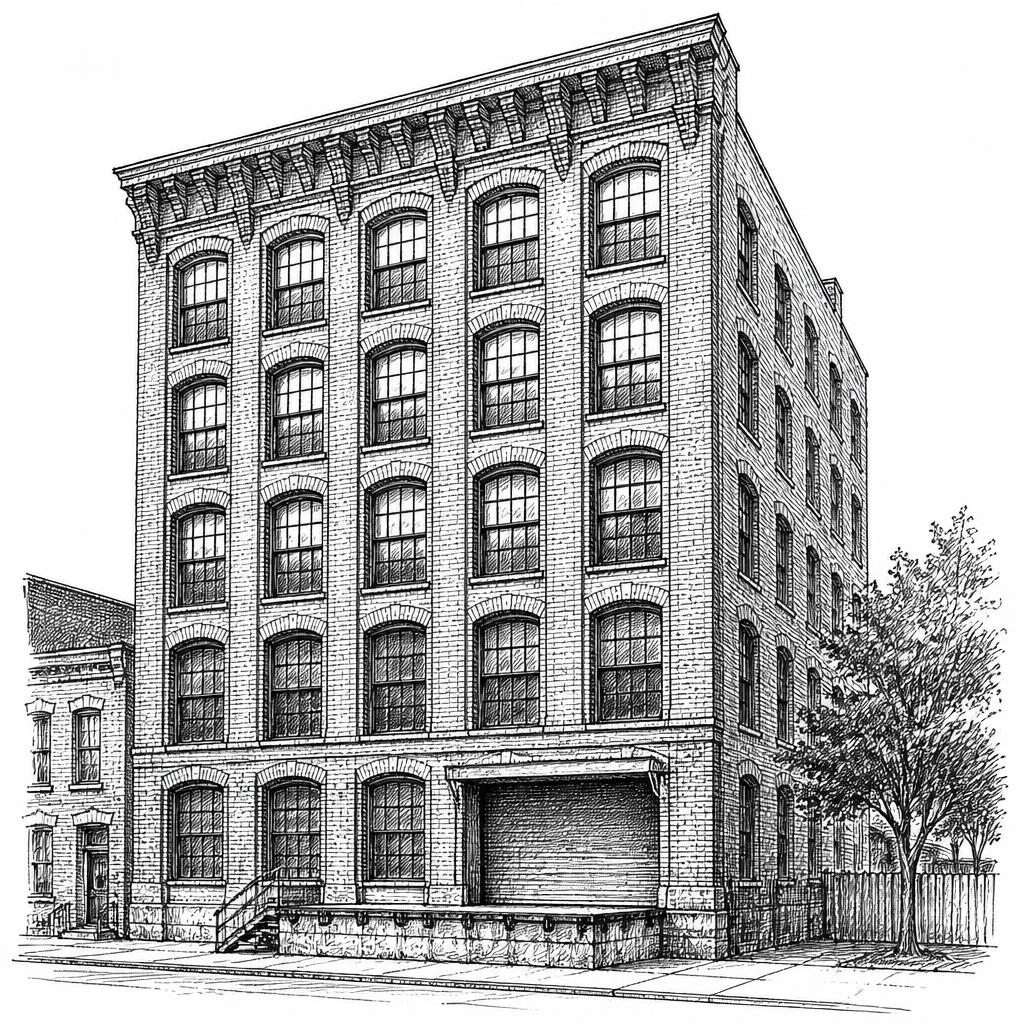
Brick manufacturing blocks and converted Navy-adjacent industrial buildings inland from DUMBO. Lower ceilings and plainer floors than the Gair district, but easier loading and space that isn't landmarked.
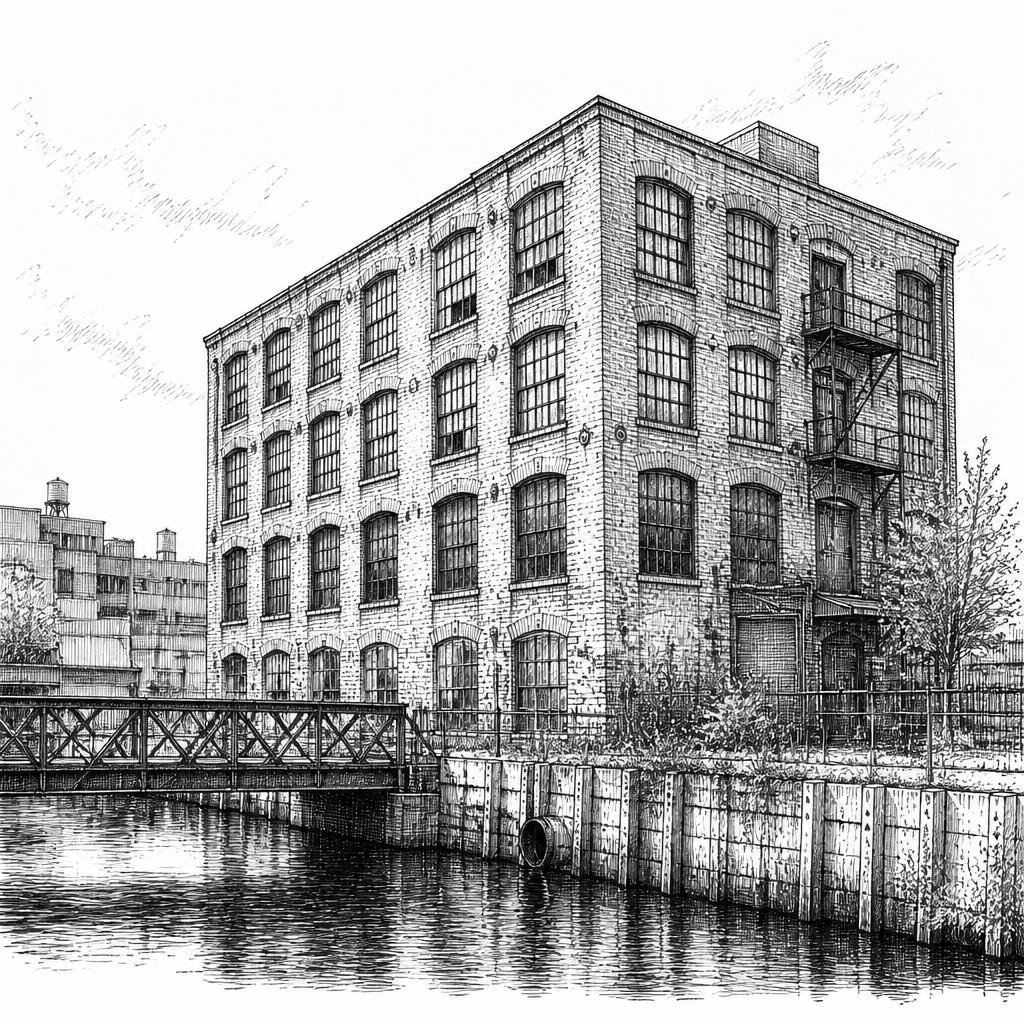
Low-rise working industrial along the canal — roll-up doors, ground-floor shops and fabrication space of the kind DUMBO lost when its factory floors were converted.
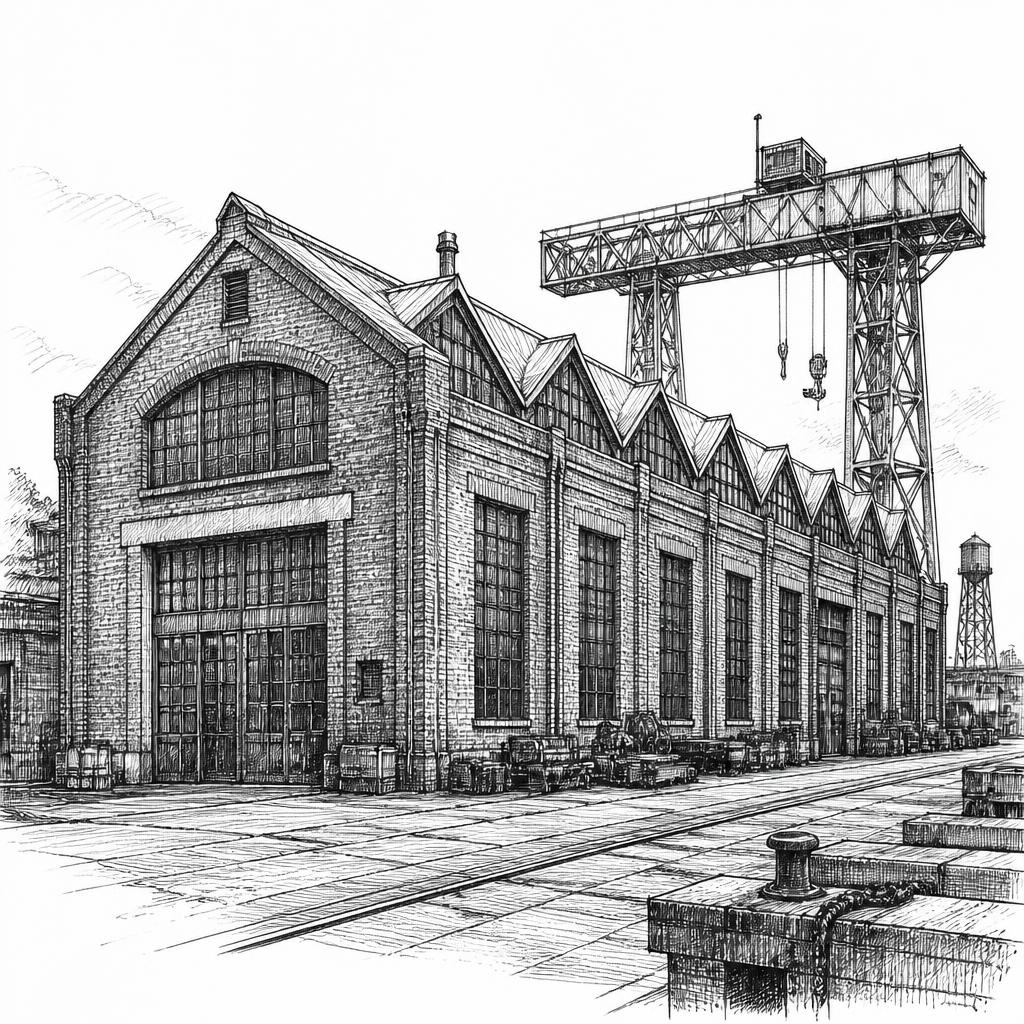
A managed industrial campus a few blocks east: heavy floors, freight access and real making space, without the historic-district review that governs every exterior change in DUMBO.
What people ask before they take a DUMBO loft.
01What counts as a 'creative office loft' in DUMBO?
02How much does loft office space in DUMBO cost?
03What's the smallest space I can rent in DUMBO?
04How do I actually get to DUMBO?
05Can I do fabrication, food production or light manufacturing here?
06What does the historic district designation mean for my build-out?
07Who actually owns the buildings in DUMBO?
08How is DUMBO different from Williamsburg or Bushwick for offices?
09What buildings are the classic DUMBO office lofts?
10Do you actually have off-market listings?
Got one we didn't cover? Put it in the brief above, or call 646-291-2018.
The words that decide what you're signing.
Every term that turns up on a tour, in a floor plan or in a lease — what it means, why it costs you, and how it behaves in this neighborhood specifically.
- Reinforced-concrete daylight factory
Early-twentieth-century construction using concrete columns with flared mushroom capitals and flat slabs, with very large multi-light windows on several exposures.
Why it mattersEngineered for machinery and for light, so wider column grids, higher and more uniform floor loads, and daylight that reaches deep into the plate.
In DUMBOThis is the Gair stock — the buildings put up to run box machinery around Washington, Water and Plymouth. It is the best-preserved concentration of these buildings in the city, and it is the reason DUMBO floors feel different from Williamsburg's. If you want an efficient open plate, this is the stock.
- Brick warehouse
Nineteenth-century load-bearing brick construction with heavy timber posts and beams, thick masonry walls and smaller punched windows under segmental arches.
Why it mattersTight column spacing, less usable plate, and light from fewer exposures. Frequently rated for less weight than the concrete stock despite looking more solid.
In DUMBOThe Empire Stores end and the older waterfront buildings. Extraordinary rooms, and a completely different product from the concrete floors three blocks inland — same neighborhood, different search.
- Historic district
An area designated by the Landmarks Preservation Commission, in which exterior alterations require approval before a building permit can be issued.
Why it mattersInterior work is unaffected. Anything touching windows, storefronts, signage, rooftop equipment or facade penetrations becomes a review timeline rather than a design decision.
In DUMBOAssume you are in it. More than ninety buildings here are inside the DUMBO Historic District. This is the single most consequential fact about fitting out space in this neighborhood, and it is why build-outs run longer here than in Bushwick or Gowanus.
- Certificate of appropriateness
The approval the Landmarks Preservation Commission issues for exterior work in a historic district. Minor work can sometimes be handled by staff-level permit; anything substantial goes to a public hearing.
Why it mattersIt sits ahead of your building permit, not alongside it. A rooftop condenser, a new storefront or a facade sign can add months to a schedule, and there is no way to buy speed.
In DUMBOGet this into your build-out programme on day one. The most common DUMBO surprise is a tenant who has budgeted correctly and scheduled as though the work could start on lease signing. Ask the landlord whether they have taken work through the process before — the ones who have will save you months.
- Belgian block
The granite setts paving many of the streets here — often called cobblestone, though true cobbles are rounder and older.
Why it mattersIt is protected streetscape, which means the surface is not getting smoothed out. It affects how a truck approaches, how a pallet jack behaves, and how sensitive equipment travels the last thirty feet.
In DUMBOCombined with narrow streets, constrained curb space and weekend crowds, this makes a DUMBO move-in something to plan rather than assume. Ask where a truck actually stops — then go and stand there on a Saturday.
- Freight elevator
A goods lift, usually with manual gates, rated in pounds. In many buildings it is run by a building employee rather than by tenants.
Why it mattersCapacity decides what you can move in. The operator's hours decide when.
In DUMBOIn the managed buildings here freight is usually scheduled rather than available on demand. Ask how far ahead you need to book it, whether weekend access exists, and what it costs — those three answers matter more than the raw capacity for most tenants.
- Floor load
The weight a floor is rated to carry, in pounds per square foot. Live load is what you can put on it; dead load is the structure itself.
Why it mattersServer racks, dense filing, libraries and equipment all need a number in writing before anything is ordered.
In DUMBOThe concrete daylight factories generally carry very well — they were built for box machinery. The older brick-and-timber stock is frequently lower than tenants assume from looking at it. Get the rating for your specific floor, not the building.
- Clear-to-deck
The distance from the finished floor to the underside of the structure above — the true ceiling height, before ductwork, sprinklers or lighting.
Why it mattersBrokers quote the highest number in the room. Retrofitted mechanical runs can take two or three feet off the usable height.
In DUMBODUMBO stock runs roughly eleven to fifteen feet, and it varies more between the concrete and brick buildings than tenants expect. Ask for clear-to-deck and separately for the height under the lowest duct.
- Loss factor
The gap between rentable square feet, which is what you pay for, and usable square feet, which is what you can occupy. Shared corridors, stairs, shafts and mechanical rooms are apportioned into your rentable number.
Why it mattersIt moves your real cost more than negotiating the face rent does. Two floors quoted identically can differ by fifteen percent in usable space.
In DUMBOWorth asking here because DUMBO prices closer to Manhattan than to the rest of Brooklyn, so the same percentage costs you more. Ask for the loss factor on the specific floor rather than the building average — in converted buildings the shaft geometry is inherited, so it varies floor to floor.
- Certificate of occupancy
The city document stating what a building is legally permitted to be used for, floor by floor.
Why it mattersIt governs your use regardless of what the lease says or what the last tenant did.
In DUMBOThe key question in DUMBO is what the building has become rather than what it was. Most of this stock converted from manufacturing to office, residential and retail, and many buildings now have homes above or beside you. If you are doing anything louder than desk work, this is where you find out whether you can.
- Base building HVAC
Heating and cooling provided by the building's central system, as opposed to units you install and run yourself.
Why it mattersBase-building systems often run on a fixed schedule, and after-hours air is usually metered separately. It is the line item that surprises people in month three.
In DUMBOThe managed buildings here run proper base-building systems with defined hours — better service than most of Brooklyn, and billed accordingly. If you run a post house or a studio working evenings, ask what after-hours costs per hour before you compare two rents.
- Sublease
Space leased from an existing tenant rather than directly from the landlord, for the balance of their term. You are their tenant; they remain the landlord's.
Why it mattersSubleases are often cheaper and come built out, but you inherit someone else's term, their restoration obligations, and a landlord relationship you did not negotiate. Renewal is rarely yours to control.
In DUMBODUMBO has more of this than the rest of Brooklyn, because ownership is concentrated and tenants here are larger. It is frequently the best value in the neighborhood — just read what happens at the end of the term, and ask whether the landlord will consider a direct lease when it expires.
- Letter of intent
A short document setting out the commercial terms — rent, term, free rent, improvement money — before lawyers draft a lease. Generally non-binding, except for any confidentiality or exclusivity clauses inside it.
Why it mattersTerms conceded in a letter of intent are very hard to claw back in the lease, and the parts that are binding are binding.
In DUMBOBecause ownership here is concentrated and professional, the process moves faster and more formally than in the rest of Brooklyn. Come with your terms defined, and put the build-out schedule in the letter — Landmarks review means your timeline is a commercial term, not an afterthought.
- Good Guy Guarantee
A limited personal guarantee, near-universal in New York commercial leases. You personally guarantee the rent only until you vacate — provided you give the agreed notice, hand the space back broom-clean, and are current on rent. You are not personally liable for the balance of the term.
Why it mattersIt is the difference between walking away owing two months and walking away owing four years. Some landlords present a full personal guarantee and call it a good guy. Read what the document actually says.
In DUMBOInstitutional landlords here are more likely to accept a corporate guarantee or a larger security deposit instead, particularly from a funded company. If you would rather not sign personally, ask — in DUMBO that is a real conversation rather than a non-starter.
- Escalation
How the rent rises over the term. Usually a fixed annual percentage, but sometimes tied to the porter's wage — a union building-service wage rate — or to an inflation index.
Why it mattersA rent that looks flat is not. At three percent a year, the fifth year of a five-year deal is roughly thirteen percent above the first. Budget from the last year, not the first.
In DUMBOPorter's wage escalations turn up here far more than elsewhere in Brooklyn, because the buildings are professionally managed with union building service. They are harder to forecast than a fixed percentage — ask what it has actually done over the last five years before agreeing to one.
- TI allowance and work letter
The improvement money a landlord contributes to a build-out, and the document defining who builds what, to what standard, and who pays for it.
Why it mattersAs-is and vanilla box mean very different things. Without a work letter you can find yourself paying for sprinklers, a bathroom or a demising wall you assumed came with the space.
In DUMBOReal improvement money exists here, unlike most of Brooklyn — the owners are capitalised and expect to contribute. The clause to watch is who carries the Landmarks approval risk if exterior work is part of the scope, and what happens to your free rent if that approval runs long.
You know what to ask now. Tell us what you're after.
Seven questions, no account, nothing to download. A person reads every one — and comes back with floors that match, including the ones that never reach a listing site.
Written from buildings we've actually walked. If something here is wrong, or a term is missing, tell us — we'd rather fix it than have it repeated back to us on a tour.
Got a loft
building here?
We probably know a tenant for it. Quietly.
Let's talk→